Showing posts with label Interview. Show all posts

Sunday Spotlight: John Williamson, author of Collision

Sunday, 28 June 2015

Sunday Spotlight is a weekly scheme I am running to bring publicity to lesser known authors who, in the book blogging community, it is important to support.

Today's author is John Williamson, author of Collision.


About John:

J.M.J. Williamson
I grew up in York, graduated in economics from Hull University, and then moved to London to make a career as a charted accountant working for one of the world's largest firms of chartered accountants.

I am now retired living in Bedfordshire and pursuing what I love most - writing.

I love sci-fi movies and books, and I love writing. It was therefore not surprising that my first novel published would be a sci- fi novel.


Interview: 

Tell us what makes Collision unique

Collision is a thriller, a sci-fi and a love story all in one novel. It started life as an idea. A man is running along a beach at night when a UFO crashes further down the beach after a high altitude collision with a US spy plane. However, when he gets to the crash site it has gone. But now the US, UK and Russian secret services are trying to find it and the mysterious catwoman to get hold of the UFO technology.

The main characters are the man of the beach (Ben), a university lecturer, and the mysterious catwoman seen on the beach (Elle). The antagonists include the secret services of three nations and some more. Let’s just say the UFO is not what it first seems. No spoilers here.

Your book is labelled a sci-fi romance, what attracted you to that genre?

I don’t think I set out to write a cross-genre story. I wrote the story I wanted to tell and then looked for the best way to describe it. At the heart of the story is a classic Sci-Fi trope: time travel. There is also a strong romantic theme to the story, which is something more than just the ‘B’ story. At the time of publication I chose sci-fi romance as the best way of describing the story. But with the benefit of hindsight I may have been wrong. The story does not easily fit into mainstream Sci-Fi or Romance genres. An alternative would have been to place it under the thriller genre which captures some elements of speculative fiction.

In your bio you describe your love of sci-fi movies, what would you say was the main difference between sci-fi movies and novels? (minus the obvious of course)

Money. Hollywood tends to choose stories that will make the biggest impact on the box office. Most of these tend to be storylines with positive endings rather than tragedies. But then again I tend to like positive endings.

Money is also important to finance the amount of time and resources invested in a blockbuster movie. Unlike a novel, a movie is a collective effort of numerous writers, the director, actors and technicians. A huge effort goes into preproduction and post production to produce the highest of quality stories. Every second of a movie is there for a specific reason, and what is surplus ends up on the cutting room floor.

Compare that to time and resources available to the poor novelist who has to rely on himself/herself plus maybe a helpful agent, and an editor.

Having said that I believe a writer can learn a lot about story design from analysing why certain movies are so successful.

Who is your favourite character of your creation?

That’s a difficult question to answer. I like them all in different ways. I would say Jean Daniels who plays the main antagonist in Collision. She’s a relentless CIA operative who will stop at nothing to achieve her objective. But she’s not driven by selfish reasons or greed — others are. She’s a patriot following in the footsteps of her heroic father. In some respects she is a mirror image of the main character (Elle), who is a workaholic. The only difference between them is that Daniels has psychopathic tendencies: she doesn’t have any boundaries she wouldn’t cross to get what she wants.

Which authors would you say influenced your work the most?

In my younger days, I would say the Sci-Fi writers: Frank Herbert, Robert Heinlein, Isaac Asimov, Poul Anderson. They certainly stirred my interest in science fiction. More recently, I have learned a lot from the works of Dan Brown, Stephenie Meyer, Suzanne Collins and Veronica Roth.

Give us an excerpt of a favourite review you have received for one of your books.

Here are two extracts:

“… an immense and complex thrill seeking adventure. It gives way to strong characters and constant action with a little romance thrown in for good measure…”

“This is a novel about high-tech, industrial espionage, corporate greed and… time travel!”

Do you have anything new in the works that we should look out for?

Yes. I’m in the editing phase of my second novel, which I hope to publish in the autumn. It’s another sci-fi story set again in the current day. The main characters are a unmarried mother with a sixteen-year-old daughter running a spa hotel in a Yorkshire village whose best friend is an alien, and a redundant investment banker from the City of London! Together they must save the Earth from enslavement by evil alien corporations. And No, before you laugh, it’s not a comedy. I said it was unusual. There is some more detail about the book on my website jmjwilliamson.com.

Tell us something unexpected about the life of an author.

With the exception of the big-named authors, the vast majority of writers don’t make a huge amount from their writing. They write because they love to write. Of course, we would all love to write the blockbuster novel and movie. But the reality is that you’re more likely to be hit by lightening than get such a pay-off.

Having worked in the City of London for almost forty years as a chartered accountant before retiring I’m fortunate in not having to rely on my writing to put food on the table. But other indie authors are not so lucky, many having to combine their writing with a full time job.

Is there anything else you want the readers of Confessions of a Bookaholic to know?


I’m always contactable through my website at jmjwilliamson.com. and I would love to have feedback from readers. In fact, like most writers I crave feedback. Also if anyone would like to review my new book before publication drop me a line.

About Collision:
Collision - a sci fi romanceThis is a story about corporate greed, espionage and time travel. But it’s also a love story about two scientists from different times, who are caught up in the events.

A UFO collides with a US spy plane at 150,000 feet, but survives. US military intelligence track the path of the UFO to a beach in Northern England, before they lose sight of it. After a call from the Whitehouse to Downing Street, MI6 are tasked to work with the CIA to investigate the UFO. But with the UFO now gone, the only clue to its whereabouts is a mysterious cat woman seen by a witness on the beach.

The morning after the incident, a young woman wakes up in a service station after sleeping there overnight. Traumatic memories of her escape, from the night before, flood into her mind. Now her only chance of returning home is to find the scientist who shares her field of research, and persuade him to help her before the security forces catch her.

Find out more about Collision on Goodreads | Website

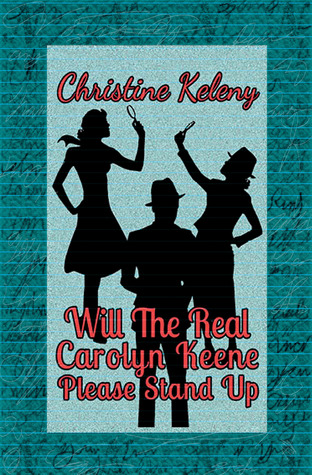
Sunday Spotlight: Christine Keleny, Author of Will the Real Carolyn Keene Please Stand Up

Wednesday, 24 June 2015

Sunday Spotlight is a weekly scheme I am running to bring publicity to lesser known authors who, in the book blogging community, it is important to support. If you are an author and you wish to be considered for it please email me at emily.confessionsofa
bookaholic@gmail.com with 'Author Spotlight' in the subject line.

I know it's not Sunday, don't worry, but I am now caught up from my very busy period earlier this month.

Visiting with us today is Christine Keleny, author of Will the Real Carolyn Keene Please Stand Up.

About Christine:

Christine Keleny
I am a writer, reader, author, editor, book designer and publisher. I am a mother of two, mostly grown, children and a wife. I like working with my hands, so when the need or desire arises, I crochet, sew, tile, paint, cross stitch, frame pictures, stain furniture, cut and split fire wood, x-country ski, train and ride horses…

But my main loves are writing and helping others publish the book of their dreams. I started writing in college (a while ago!) and haven't stopped since. I'm having the time of my life!

Find out more on Goodreads | Amazon | Website

Interview:

Hi there Christine!
Tell us about your book, ‘Will the Real Carolyn Keene Please Stand Up’.
Carolyn Keene is a pseudonym for some 28 writers of Nancy Drew, though there were three primary writers. But who really created Nancy is a significant controversy in the Nancy Drew world, so that is what my story is about, the three primary characters of Nancy and how she came into being.

What inspired you to write a Nancy Drew rewrite of sorts?
My book is not a mystery, but it is fiction. It tells of the lives of the three primary creators of Nancy and shows what influences they all had in writing her story.

Which of the characters is your favourite and why?
I think I like Nancy’s first creator, Edward Stratemeyer, the best. He sounds like he was a very interesting and pleasant man. He was very creative and a prolific children’s writer. He really made writing for children a thing. He wrote the Hardy Boys, the Bobbsey Twins, Tom Swift and many many more.

Tell us about your other works.
My first three books are what I call my Rose series (Rosebloom, A Burnished Rose, Rose From the Ashes). They are three books about a young farm girl in Wisconsin in 1936 who runs away from home to get a job on a Mississippi riverboat. Book I is about her time on and along the river, Book II is when she becomes a nurse in WWII and book III is when she comes home.
Then there is “Living in the House of Drugs.” That is a memoir I wrote for a recovering addict and alcoholic that grew up in the Chicago projects.
“The Red Velvet Box” is a book I only have as an ebook. I want to illustrate that book so have not put it in print yet. It is set in 1951 and is about a young girl and her relationship to her grandmother, who is getting forgetful. She connects with and helps her grandmother through a box of old Christmas ornaments.

What authors would you say influenced your work the most?
I write mostly historical fiction because I love history and I think it’s a great way for people to learn about our past. I’m not sure there is any one author, but the king of historical fiction in my eyes is Gore Vidal.

I read that you also help struggling writers get published, tell us about that.
My day job (which is my second career) is my indie publishing company: CKBooks Publishing
I offer editing – all types - print book formatting, ebook formatting, simple cover design and book publishing. Or I can just answer any questions a writer might have. Whether you are self-publishing or going the traditional route, there is a lot of information out there and it can be confusing, so I like to help authors by answering any questions they might have about the process. I was a new author once myself, so I like to help when I can.

What advice would you give to writers who are just starting out?
Read a lot, especially in the genre that you’re writing in, but really any good writing is helpful to read, and of course, write a lot. Don’t worry if it’s any good, just write. Computers make it so easy to change things after the fact.

I read that you have won an award for your work; did you ever imagine you’d get so far?
It’s nice to feel like others think you are doing well with your writing, but that is really just a marketing thing when a writer puts their book into a writing contest. What readers I really want to impress are the ones I meet at book events or online.

What other upcoming books should we look for from you?
When you asked about writers who influenced me, one I have really resonated with lately is Alan Bradley. He has written the Flavia de Luse mystery series. So I am going to attempt to write my first middle-grade mystery about a 12 year old girl by the name of Agnes Kelly. Agnes is a precocious girl in 1961, who is taken under her grandmother’s wing after her father dies. Grandma thinks there is something fishy about her son’s death and Agnes gets drawn into the mystery. But in the style of Alan Bradley and JK Rowling, I’d like my book to transcend age limits. We’ll see!

Is there anything else you want the readers of Confessions of a Bookaholic to know?
As a promoter of indie authors, I would like to remind readers that no matter who you read, please leave reviews of what you’ve read. It is so important to any writer, but especially writers who don’t have a large publishing company to back them up. It also helps other readers. There are so many books out there to choose from and your opinion does matter!

Thank you for joining us at Confessions of a Bookaholic!
Thanks for having me! And happy reading!

About Will the Real Carolyn Keene Please Stand Up:

Will the Real Carolyn Keene Please Stand Up
If you always wondered how the plucky, intelligent, resourceful, and famous girl sleuth we affectionately call Nancy came into being, “Will the Real Carolyn Keene Please Stand Up” will give you insights into the lives of the three primary creators of Nancy and her pals and the controversy that still rages today about who really created the Nancy that millions of readers across the globe have come to know and love.

"Will the Real Carolyn Keene Please Stand Up is a fresh take on one of America’s most popular characters—Nancy Drew. Keleny offers readers a behind-the-scenes look at the dedicated and determined creators of the series. She also reveals the competing—and often conflicting—visions each author had for Nancy. This novel is entertaining, smart, and exceptionally well researched. It is certain to interest anyone who is curious about the surprising mystery behind the Nancy Drew mysteries." ~ Jenna Nelson, PhD

To be in for a chance to win enter the competition below!

a Rafflecopter giveaway


Sunday Spotlight (on Wednesday): Elisabeth Grace Foley, author of the Mrs Meade Mysteries

Wednesday, 17 June 2015

Sunday Spotlight is a weekly scheme I am running to bring publicity to lesser known authors who, in the book blogging community, it is important to support. If you are an author and you wish to be considered for it please email me at emily.confessionsofa
bookaholic@gmail.com with 'Author Spotlight' in the subject line.

Visiting with us at Confessions of a Bookaholic today is Elisabeth Grace Foley, author of the Mrs Meade Mysteries.

I have been so busy recently which is why the spotlights I missed are being posted this week - don't worry I am back on track now!

About Elisabeth:
Elisabeth Grace Foley is a historical fiction author, avid reader and lifelong history buff, the author of Peacemaker Award-nominated Western novella Left-Hand Kelly, and short story collections The Ranch Next Door and Other Stories and Wanderlust Creek and Other Stories. Her work has appeared online at Rope and Wire and The Western Online. Her other books include a series of short historical mysteries, the Mrs. Meade Mysteries; and short fiction set during the American Civil War and the Great Depression.

Find out more about Elisabeth on Goodreads | Blog | Amazon

Interview:

Hi there Elisabeth, welcome to Confessions of a Bookaholic!
Thank you! I’m excited to be here!

Firstly, you have written a lot of books! Tell us about some of your most popular ones.
My series of historical mystery novelettes, the Mrs. Meade Mysteries, have been my bestselling titles most of the time. Everybody loves a mystery! Mrs. Meade is a shrewd but kind-hearted widow lady with a knack for solving the puzzles that arise in a small Colorado town in the early 1900s. Think Miss Marple in the Edwardian era, in a part of America that still has a bit of the frontier element left. And my novella Corral Nocturne, which is a retelling of Cinderella set on the Montana prairies, has also been popular with readers; it’s been receiving some lovely reviews!

What is it about historical and western fiction that you like so much?
History has always fascinated me from a very early age—I love reading about past times and about the personal stories of the people who lived them. There’s a quote by Louis L’Amour that I like: “Historical novels are, without question, the best way of teaching history, for they offer the human stories behind the events and leave the reader with a desire to know more.” That’s definitely been true for me. As for westerns, I grew up watching western movies with my dad and enjoying them, and then later, when I ventured into reading western fiction and history, I became interested in the Old West era as a part of American history. I find it a wonderful backdrop for storytelling: you have such a large slice of the country to choose from for your setting, and so much history to spark ideas for plots and characters. It isn’t only about the cowboys and outlaws; it’s about the families who settled the country, those who went west to start a new life after the Civil War, the young people who headed west to seek their fortunes. There are so many stories there to tell.

How do you balance fact and fiction in your works?
Usually when I set out to write a story it’ll be in a time and setting that I’m already interested in, so I have a background gathered from the history I’ve read, and also from fiction written at that time. I try to have my characters speak and act in a way that’s realistic for the time period—reading fiction written during the era itself is an excellent way to get a sense of that—and I research factual things like clothes, houses, inventions, etc. as I go along, if I run into something that I don’t know about in detail.

What authors influenced your work most?
For westerns in particular, my biggest influence is probably my personal favorite B.M. Bower, an early woman author of westerns who began writing around the turn of the 20th century; and also Henry Herbert Knibbs, Dorothy M. Johnson, Max Brand, and Elmore Leonard’s early western short stories. O. Henry, P.G. Wodehouse and A.A. Milne taught me the delights of wordplay and a sense of humor; Booth Tarkington and Leo Tolstoy I love for their ability to create wonderfully human, sometimes flawed but relatable characters; while authors like Mary Stewart and Daphne du Maurier leave me awed by their skills with description and creating a sense of place and atmosphere.

I notice that you write lots of short stories/novellas, what is it about those that appeal to you more than the traditional novel?
Actually, my ambition has always been to write novels. If anyone had told me five years ago that I’d have written and published this much short fiction, no one would have been more surprised than myself. But I’ve enjoyed writing short stories and novellas, and I feel that all the work I’ve put into them has been like serving an apprenticeship in honing my writing skills. At present I’m trying to take a step back from shorter works for a while (except for continuing the Mrs. Meade Mysteries) and focus on finally completing a novel—I’ve got a few novel manuscripts in various stages of being written or edited.

On your blog you say that you’re a Christian, many writers cite their faith as a major influence on their works – is this the case for you?
I don’t see myself as writing so-called “Christian fiction,” because I’ve always been rather ambivalent toward that term—but yes, my Christianity does influence my work in the way it influences all areas of my life. I always strive simply to craft the best quality book that I’m able, but I think my writing will always reflect my beliefs and worldview in some way, as all writers’ do. Sometimes Christianity may play a direct role in a story, if I feel it’s needful to the plot; other times it won’t; but I think it always influences what I write in some way.

What books would you compare your works to? Comparisons are always helpful for readers looking for more books.
Well, as I mentioned before, I think anybody who enjoys Agatha Christie’s Miss Marple books and similar mysteries will enjoy the Mrs. Meade Mysteries. A recent reviewer of Corral Nocturne compared its style of that to L.M. Montgomery, which was a very flattering compliment! For my westerns, I think readers who like the traditional westerns of Louis L’Amour and others will enjoy them; but my stories are not just based around gunfights and action; they’re largely character-driven and I think they would appeal to readers of general historical fiction too.

You described a liking for ‘obscure forgotten gems’ in your blog, will you share some of those with my readers?
Some of my favorite discoveries from the past few years: Thorofare by Christopher Morley, Poor, Dear Margaret Kirby and Other Stories by Kathleen Thompson Norris, The Street of Seven Stars by Mary Roberts Rinehart (one of her non-mystery novels, set in Vienna just before the outbreak of World War I), and Uncle Abner, Master of Mysteries by Melville Davisson Post, to name just a few. And one of my favorite books ever is Westward Ho! by Charles Kingsley, a splendid adventure novel set in the Elizabethan era that doesn’t seem to be as well known.

Which of the characters that you’ve created do you like the most and why?
I get quite attached to most of them, but I think some of my favorites are Claire Lester in Left-Hand Kelly, Cole Newcomb in Corral Nocturne and Sheriff Andrew Royal in the Mrs. Meade Mysteries. Sheriff Royal has been one of the most fun characters for me to write. As for Cole, when I set out to write a Cinderella retelling, I knew I wanted to give my Prince Charming character a little more personality and charm than the prince seems to have in most traditional versions of Cinderella—and I think I succeeded pretty well, for I’m quite fond of him myself. With Claire, it’s a little harder to say, but by the time I finished writing the book she was one of the characters that I liked and empathized with the most.

Which of your works did you find the most enjoyable to write?
Probably my short story “The Rush at Mattie Arnold’s” from Wanderlust Creek and Other Stories. The idea for the story came to me on the spur of the moment, and it only took a few days to write, which is much faster than I usually complete a story. I knew where the story was going, the ideas for dialogue came to me smoothly as I went along, and basically it was just plain fun.

I noticed that you're quite young to have so many works published, what advice would you give to a young writer like yourself?
First of all, read—read plenty of good books, and definitely include classics that have stood the test of time. There’s nothing like reading quality books to observe what good writing looks like, and to get a feel for what works and what doesn’t work. Second, if you are young and just considering publishing for the first time, I’d advise taking a good hard look at your work and deciding if you’ve really made it the best it can be before you go ahead and put it out there. There are some manuscripts I wrote not too many years ago that I’m glad I didn’t rush ahead with, things I’m quite content now to regard as practice for what came after. Edit it as many times as you need to; get honest feedback from friends or beta-readers, and just try to appraise it honestly.

Finally, do you have any upcoming works that the readers of Confessions of a Bookaholic should look out for?
The one definite thing on the agenda at the moment is the next entry in the Mrs. Meade Mysteries, The Silent Hour, which I’m aiming at releasing in autumn 2015. After that, I don’t know yet which of my works-in-progress will make it into print next!

Elisabeth has kindly agreed to give away a copy of Left-Hand Kelly, which was recently named a Peacemaker Award finalist for Best Independently Published Western Novel


Left-Hand KellyAbout Left-Hand Kelly

Sixteen-year-old Lew Kelly grew up idolizing his enigmatic ex-gunfighter father. Everyone thought Lew’s habit of practicing his quick draw was a harmless amusement—until the day when a boys’ hot-headed quarrel exploded into gunplay, with disastrous results.

Three years later, Lew is withdrawn and bitter—and he still carries a gun. When an unexpected twist of circumstances forces him to face again the memories and the aftermath of that ill-fated fight, will old wrongs be righted—or will the result be an even worse tragedy than before?

Find the book on Amazon | Goodreads | Blog

a Rafflecopter giveaway


Sunday Spotlight: Marc Nash, author of An Eye for an Eye for an Eye

Sunday, 24 May 2015

Sunday Spotlight is a weekly scheme I am running to bring publicity to lesser known authors who, in the book blogging community, it is important to support. If you are an author and you wish to be considered for it please email me at emily.confessionsofa
bookaholic@gmail.com with 'Author Spotlight' in the subject line.

Visiting with us at Confessions of a Bookaholic today is Marc Nash, author of the dystopian novel An Eye for an Eye for an Eye.

About Marc

20 years in the counterculture working at Rough Trade Record Shop, now working in freedom of expression NGO world. I hope my books are more than just the sum of the above. I used to be a playwright, but then started writing more for dancers and physical theatre performers. I like a challenge and I like to move out of my comfort zone. Now I’m a novelist and am writing more ‘voice’ than I ever did as a playwright. Go figure!

Find Marc on Goodreads | Amazon | Blog


Interview

Hi there Marc!
Tell us something about An Eye for an Eye for an Eye that the synopsis doesn't cover.
That it’s a police procedural without an actual detective at its heart and is actually about the death of procedure. It’s a dystopia which is in fact not too far further from becoming a reality in our world if certain current events continue to play out. And it has paranormal elements which are explored as to whether they can be truly called paranormal or not. So it’s both three genres and not those genres at the same time!

Tell us about your genre(s) and why they interest you?
I don’t restrict myself to any single genre. This one was dystopian because I was thinking a lot about the civil unrest in countries like Greece and Italy due to the economic cuts imposed by their governments as the Eurozone hit financial trouble. I just imagined what it would be like to take that to its logical conclusion and that ended up in a dystopia!

Who is your favorite character from all of your works?
Karen Dash from my novel “A,B&E”. She’s a tough woman who’s had to hold her own in two very male worlds of academia and criminal gangsterism, through a mixture of being as tough as the men, while also retaining enough femininity to give her that little bit extra over the men. She’s funny and clever and yet also ground down by the male worlds she has to operate in. She directly addresses the reader too, as if you’re holding a conversation with her.

What sets An Eye for an Eye for an Eye apart from other works?
It is that most difficult of things, a genre work which has high literary content. It goes deep into character motivations; there are thoughts about man’s relationship with man when our creature comforts are denied us and lots of metaphors and images to give a real sense of the physical environment. And as already mentioned, it subverts its genres as much as conforms to them.

What author do you believe inspired your work the most?
None specifically, though this book only came about because I was so irritated by a book I read that claimed to be both genre and literary and was really bad, that I sat down the next day to write one of my own. There was no planning, I just started writing, though many of the ideas and themes must have been swirling about in my head, my irritation just brought them altogether to produce this book! The first draft came together really quickly.

What is the best feedback you've got on your work?
I’ve been described as “thought-provoking” and “use(s) the reader’s grey cells like a hockey puck. There is no slacking off you have to pay attention”. A critical review for a collection of my flash but which really tickled me was “just strings of words that took up space and left me none the wiser afterwords”. I really liked the first half of that statement as a description of all literature!

You say you do flash fiction, tell us about that.
1000 words maximum to tell a story is just so liberating rather than restrictive. With no time to set the scene, no room for lengthy descriptions of character, it places such a high value on the words themselves. With so few to play with, the words have to do so much work and this emphasises metaphor and imagery which allow you do that. I’ve now written 200 stories, mainly one a week and it’s really influenced my longer novels as well. I’ve published four collections of flash; many of the stories will knock your socks off in terms of what we imagine the structure of a story to be. With flash anything is possible, in a way that couldn’t be sustained over the length of a novel.

Your cover for An Eye for an Eye for an Eye is very unique, how does it link to your book?
It was collaboration between me and the artist Little Appleseed. I let her choose the central image she thought appropriate from the book and then we honed it between us. Mezcal is a Latin American drink like tequila in which a worm is added to the mixture. Supposedly if the worm is preserved by the Mezcal, it shows it’s good quality alcohol! The worm is also said to be hallucinogenic if swallowed. Like many detectives, the protagonist in the book is a heavy drinker and due to his emotional state often looks to crawl inside the bottle to be with the worm. I love the way Little Appleseed echoed the worm in the bottom of the bottle with the colouration of the eye on the label. We also came up with the idea of reversing the author’s name looking through the bottle glass. I like covers in which title and author name are organically part of the image, rather than take away from the overall effect.

What other works should we look out from you in the future?
Well I have a healthy back catalogue of seven other books. I’m trying to get a book of short stories published traditionally, while I have enough flash stories for my fifth collection and perhaps my strongest yet. I am also collaborating with a video designer on a kinetic typography video of one of my flash stories. I’ve done this once before and represents a very different and fresh way of telling a story, by emphasising the letters that make up the words, since these are what move in kinetic typography. My first video is here.

If you could invite three authors to lunch, past and present, who would they be?
Samuel Beckett definitely for his humor and take on the world. William Burroughs just because he was so out there and would have tons of anecdotes. And Franz Kafka my favorite author of all, though he’d probably refuse or complain about the food because that’s just the kind of guy he probably was! I think he’d get on well with Beckett though, they’re equally dark.

Is there anything else you want to tell the readers of Confessions of a Bookaholic?
Just thank you to readers and you wonderful book bloggers for all the support you give to us indie authors! You guys make it all worthwhile.

Thank you for joining us on Confessions of a Bookaholic!

About an Eye for an Eye for an Eye
You can tell a lot about a society from its murders. And Simon Moralee can tell everything from its victims. He has the gift- or is it a curse?- of being able to recover a vision of the last thing murder victims had imprinted on their minds before death. It means he can identify their killers and describe them to the police to secure a one hundred percent clean-up rate. A gift he first discovered as a teenager when cradling his butchered mother in his arms.

His financially bankrupt society leaps at the opportunity his gift provides, by cutting the level of policing and detection back to the bone, as a yet another cost-saving measure. The few remaining policemen serve as Simon’s minders as they seek to protect their most valuable asset and the one remaining celebrity the State can promote to their citizens as a good news story. Only people are losing interest in his exploits, as they lose hope for their society with its murder rate spiralling beyond Simon’s ability to keep pace. And into this numbers game emerges a new threat, when a criminal mastermind with a psychic power of his own, challenges Simon in a psychological joust to the death...

Find An Eye for an Eye for an Eye on Goodreads | Amazon 

Marc has kindly agreed to a giveaway of An Eye for an Eye for an Eye plus the flash fictions Long Stories Short and 52FF. Enter below! The first winner selected will win AEFAEFAE, the second LSS and the third 52FF.

a Rafflecopter giveaway

Make sure to let Marc and I know what you thought of the spotlight in the comments!

If you are an author and want to be spotlighted drop me an email. Don't forget to share my spotlight posts wherever you can, it's really important to support the lesser known author community! Also if you want to be included in my scheme then you need it to be popular enough for you to have maximum publicity!

If you do share my scheme let me know where and I will post an endorsement of your blog/book/anything in exchange on my Twitter account.

Sunday Spotlight on Wednesday: John McCaffrey, author of The Book of Ash.

Wednesday, 20 May 2015

Sunday Spotlight is a weekly scheme I am running to bring publicity to lesser known authors who, in the book blogging community, it is important to support. If you are an author and you wish to be considered for it please email me at emily.confessionsofa
bookaholic@gmail.com with 'Author Spotlight' in the subject line.

This spotlight is a bit late due to a busy schedule but visiting today's Sunday-spotlight-on-Wednesday is John McCaffrey, author of the dystopian satire, The Book of Ash.

About John 

Originally from Rochester, New York, John graduated from Villanova University, and later received his MA in Creative Writing from the City College of New York. His stories, essays and book reviews have appeared in more than 30 literary journals, magazines and newspapers.

A Pushcart Prize nominee, his story Words, first published in Fiction Magazine, was also selected for Flash Fiction Forward, an anthology containing work from some of the most noted writers of our time, including Grace Paley, Dave Eggers, and Paul Theroux.

John also helps direct a nonprofit organization in New York City and is an Adjunct Creative Writing Professor at the College of New Rochelle’s School of New Resources. His debut novel, The Book of Ash, was released by Boxfire Press in 2013.

Visit John on Goodreads | Amazon | Website

Interview 

Tell my readers about ‘The Book of Ash’.

The idea for The Book of Ash came years before, right after 9/11. My first thought was to write a novel set in a society whose one and only goal is to create “emotionally healthy” individuals, people, for example, who are not inclined to crash planes into buildings or wage vengeful wars. But the more I wrote, the more I began to doubt that such a thing could be achieved. If anything, I latched onto the notion that forcing someone to behave in a certain way is the surest way for them to do the opposite. And so the book became darkly satirical, a dystopia in the same vein as Orwell’s 1984, depicting, as one reviewer wrote, “a world that that is endearing and menacing, farcical yet deadly serious, wholly invented and yet strangely familiar.”

While purposely comedic, I also think The Book of Ash is surprisingly sexy, perhaps not in a Fifty Shades of Grey way, but more in the understated, underhanded, and unhinged manner that befits most romantic relationships.

How do you balance the mixture of satire and dystopia?
My belief is that most or all writers are contrarians, more suspicious than cynical, especially when confronted with something that seems too good to be true. But I also believe that most writers are shy, and rather than stand up on a soap box yelling their views, they choose the safer haven of the page to voice their dissent. Even safer is satire, which blends humor into the mix, making it possible for a writer to dole out the medicine of their message, so to speak, with a bit of sugar. Thus, in the case of my novel, any balance I was able to achieve between satire and dystopia was achieved by wanting people to like me more than hate me for the story I was telling.

What is the best feedback you’ve ever got?
In the first fiction-writing class I ever took, my teacher, a wonderful woman and writer named Carol Dixon, who has since passed away, told me I had a “unique voice.” I was not sure what exactly this meant at the time in regard to writing, but I knew it was a compliment, and I needed that so much at the time, not being sure if writing was something I was good at or wanted to pursue. As I matured, and learned more about the craft of writing, I began to understand that developing an original, consistent voice to tell a story is the single most important attribute. This makes me value Carol’s words even more.

Who is your favourite character of your own creation and why?
I really like Baldwin Wallace, the lead character in The Book of Ash. He’s 33-years-old, struggling in a bad marriage, terrified of his stepfather, and pretty much conditioned to be meek. Yet he retains an ember of rebellion in his soul that allows him to fight back and find something he never thought possible: true love.

What authors would you say have shaped your writing most?
I am an obsessive reader, and once I latch onto a writer I like, I’ll read everything they’ve written, book by book, until I exhaust their collection and even my affection for their work. That said, no matter how much I try, I never tire of reading and rereading The Sun Also Rises by Ernest Hemmingway, which first showed me how important it is to use clear, concise prose. 1984 by George Orwell inspired me to take chances with imagining new worlds. Graham Greene, I feel, is the best at tapping into the inner psychology of a character to illuminate a wider theme. But of all the writers I have enjoyed, Somerset Maugham is the one who has most influenced me. I love the way he takes time to tell a story, twisting the beginning along so that you are always guessing, wanting more, even getting angry for him to hurry up, but never stopping the reading. Also, I have tried to emulate his style of spacing narrative and dialogue. His prose, to me, is the cleanest, prettiest around.

What are you most proud of in your literary career?
The fact that I’m finally able, after taking numerous classes, getting my MA in creative writing, struggling to write and publish stories, struggling to write and publish a novel, going through so much, that now I can teach writing to a degree I don’t think I otherwise could. I truly feel blessed to be able to share whatever wisdom and experience I have with writers of all age levels, helping them tap into their creative force and reach their full potential.

What advice would you give new writers just starting out?
Compulsively observe. Be like Sherlock Holmes and take time to build the muscle of seeing the world, the smallest details, and the largest vistas. We are living in a time where many people experience the bulk of their day peering into an I-Phone or computer screen. The writer that breaks this trend, who takes time to see, hear, and feel the world around them, who can shut out the noise of technology and tap into the moment, will win the day with great work and publishing success. Then, of course, they can tweet all about it to their followers.

What kind of readers do you aim your book at?
People who don’t take themselves or life too seriously, but are serious about living life to its fullest.

What should we look out for from you in the future?
I’m nearly done with a new novel set in Long Island during the Prohibition era. It’s full of action and mystery, and, not to give too much away, Orwell.

Is there anything else that you wish the readers of Confessions of a Bookaholic to know about?
Only that it is a great blog and you do an outstanding job of giving writers a chance to connect with wonderful readers.

Thank you for joining us at Confessions of a Bookaholic!

The Book of AshAbout The Book of Ash:
A satire of feel-good therapy, presenting a post-apocalyptic dystopia where the peddlers of self-esteem often mask raging insecurities and homicidal urges. Struggling to survive (and just maybe find happiness) amidst the chaos is Baldwin Wallace, a 33 year-old miracle counselor whose marriage is crumbling under the weight of his wife's infidelity. When Baldwin finally decides to confront the issue once and for all, he is thrown into a dizzying swirl of events that not only threatens to change the future of this surreal world, but also bring him the one thing he thought he could live without: love.

Find The Book of Ash on Goodreads | Amazon

John has also kindly agreed to an international giveaway of 4 paperback copies of The Book of Ash!

a Rafflecopter giveaway

Blog contents © Confessions Of A Bookaholic 2010. Blogger Theme by Nymphont.